

At a glance
- Problem: Staff needed one place to find services they could refer clients to. An internal directory already existed, but about 80% of staff didn't know about it. Search was unreliable and the map was never finished, so people used Google, public directories, or group chat.
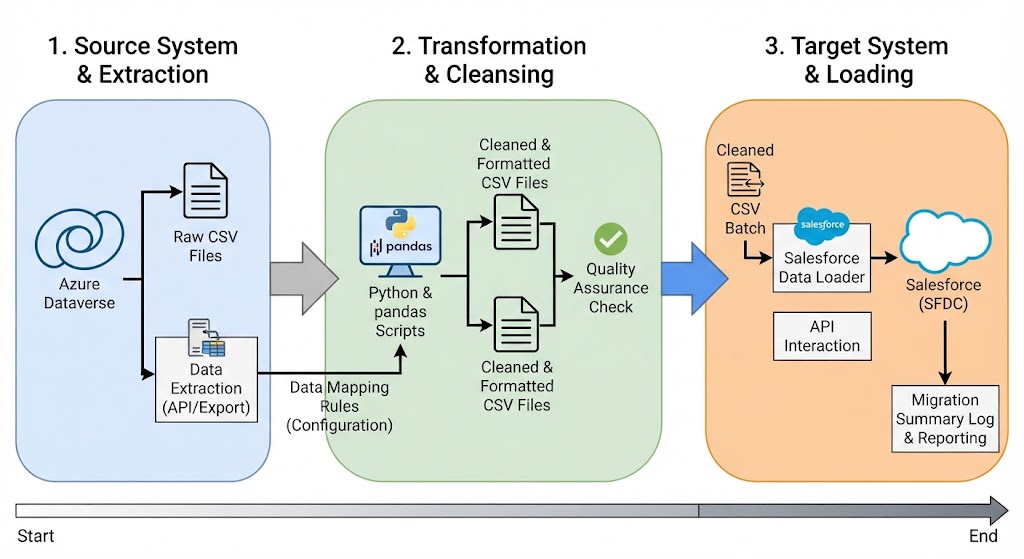
- What I did: Rebuilt the directory inside the systems staff already used, after cleaning more than 50,000 service records and 15,000 organisation records.
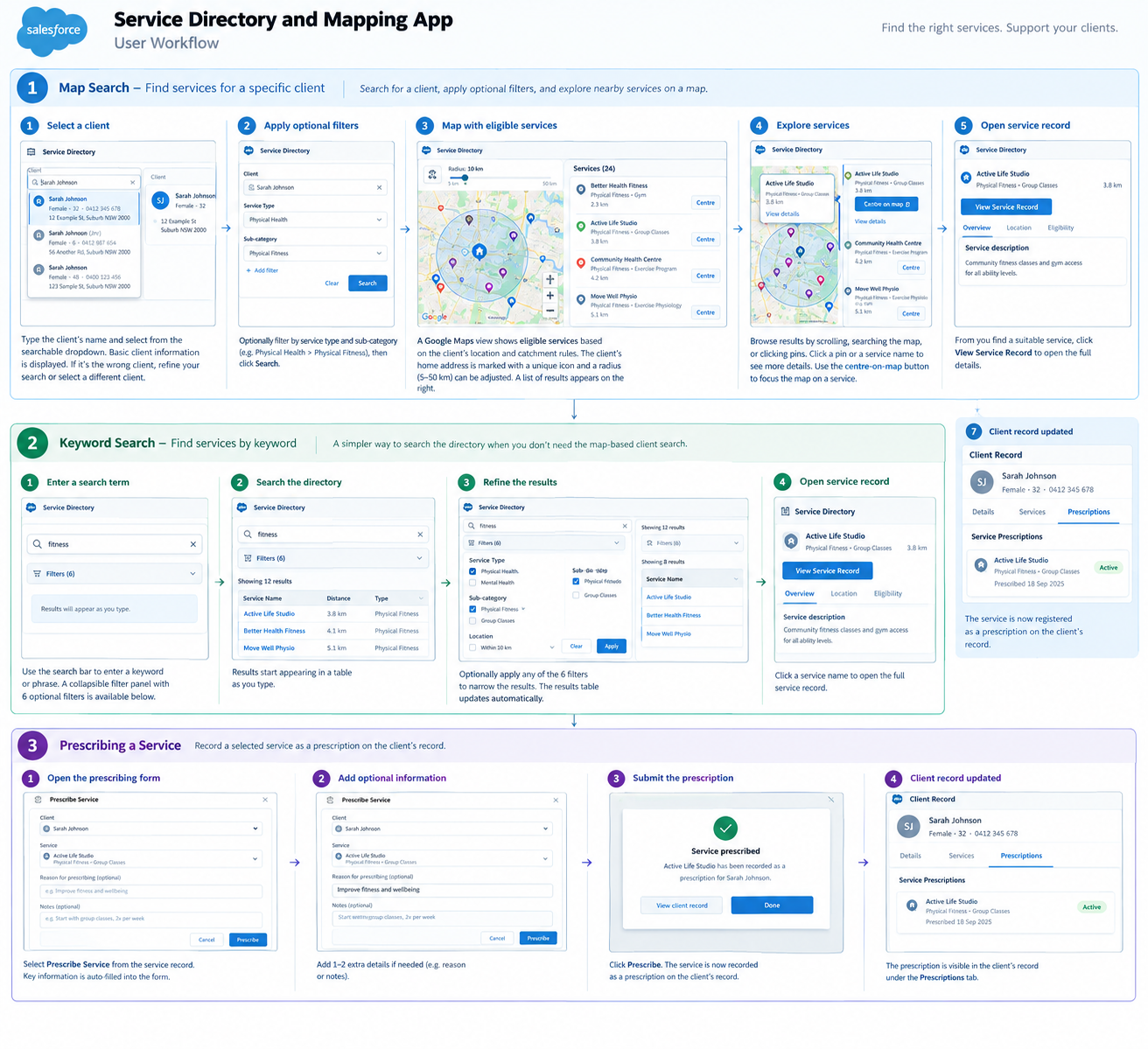
- What changed: Search went from twelve or more filters to one keyword field and six filters. Referring a service went from retyping the full details into the client record to at most two optional fields. Staff could see which services sat within 5 to 50 km of a client. Roughly 20 to 80+ people used it in production (observed range, not a measured adoption rate).
- When: Three phases over about two years. The third phase finished around June 2025.
All content and visuals in this case study have been generalised to protect the client's intellectual property. No actual screenshots of the application are used. The visuals are recreations based on the original work.
The problem
Primary and Community Care Services (PCCS) wanted staff to refer clients to suitable local services from an internal directory, not from a general public site such as AskIzzy or the National Health Services Directory.
They had already tried. An earlier tool, built by others, sat outside the software staff used every day: email and Office, SharePoint, and the client records system (Salesforce). Keyword search was unreliable, so people scrolled long lists. The map, which was supposed to be the main way to find services, was never finished.
In practice, staff Googled, checked a national directory, or asked colleagues in group chat. Useful local knowledge stayed with individuals. The project was a board-supported goal. The point was to get a directory people would actually open.
The approach
I worked with the staff who would use it, across three phases. The first two took the first year. The last took six months or less.
The first version had to start from the data they already had, not a blank database. A lot of the old search filters turned out to be fields staff said they had never needed. Later versions cut that back and put the directory into the client-record workflow, so referring someone didn't mean typing the same service out again.
The original internal app and the Salesforce client system were built by other people before this project. My work was working out why the first attempt was ignored, then rebuilding it with the people who had to use it.
How it worked
I cleaned the old service data and moved it into the system PCCS already used. Version 1 was a recognisable rebuild of the old tool. After staff tried it, search became one keyword field and six filters, plus a basic map and a national list for services available anywhere in Australia.
The larger change was the link to client records. Referring a client used to mean typing the service details into the client profile. Afterwards, staff opened the service and completed the referral with at most two optional fields. Management could then ask which types of services were being prescribed most often.
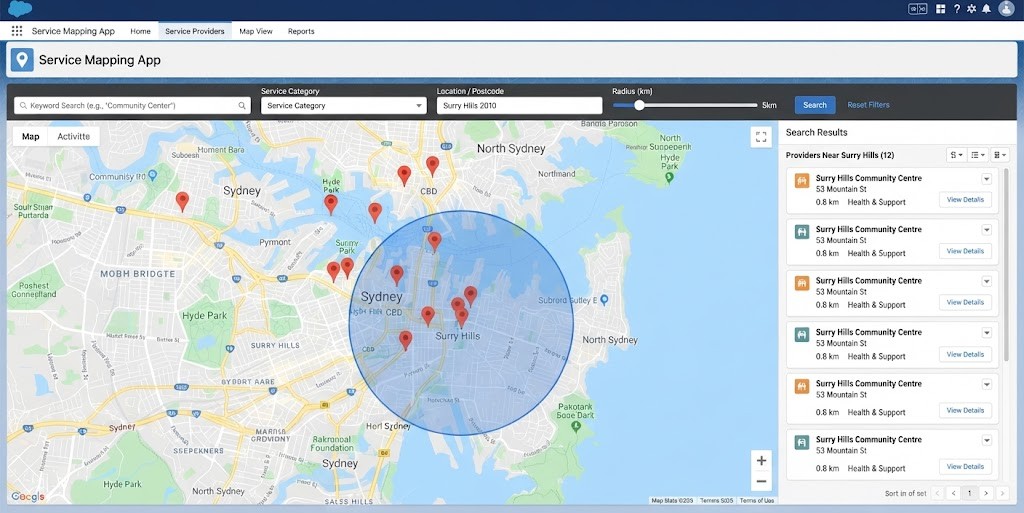
Map search became the main way to find a service. Staff could pin a client's address, set a radius from 5 to 50 km, and see which services were close enough to be useful.
I also wrote short guides and a longer manual, and ran training on Microsoft Teams, so the team could keep using the directory without me.
This was built on Salesforce because that's what PCCS already used. I work with Salesforce when it fits. It isn't my main focus.
The outcome
By the end of the third phase, the directory sat inside the referral workflow staff already used.
Day-to-day referral work
Production use ranged from about 20 to more than 80 people. I don't have a formal adoption study, so that range is observed use, not a measured adoption rate.
If your team works around an internal tool
If people avoid a system you already paid for, retype the same details somewhere else, or keep the useful knowledge in a few people's heads, get in touch.